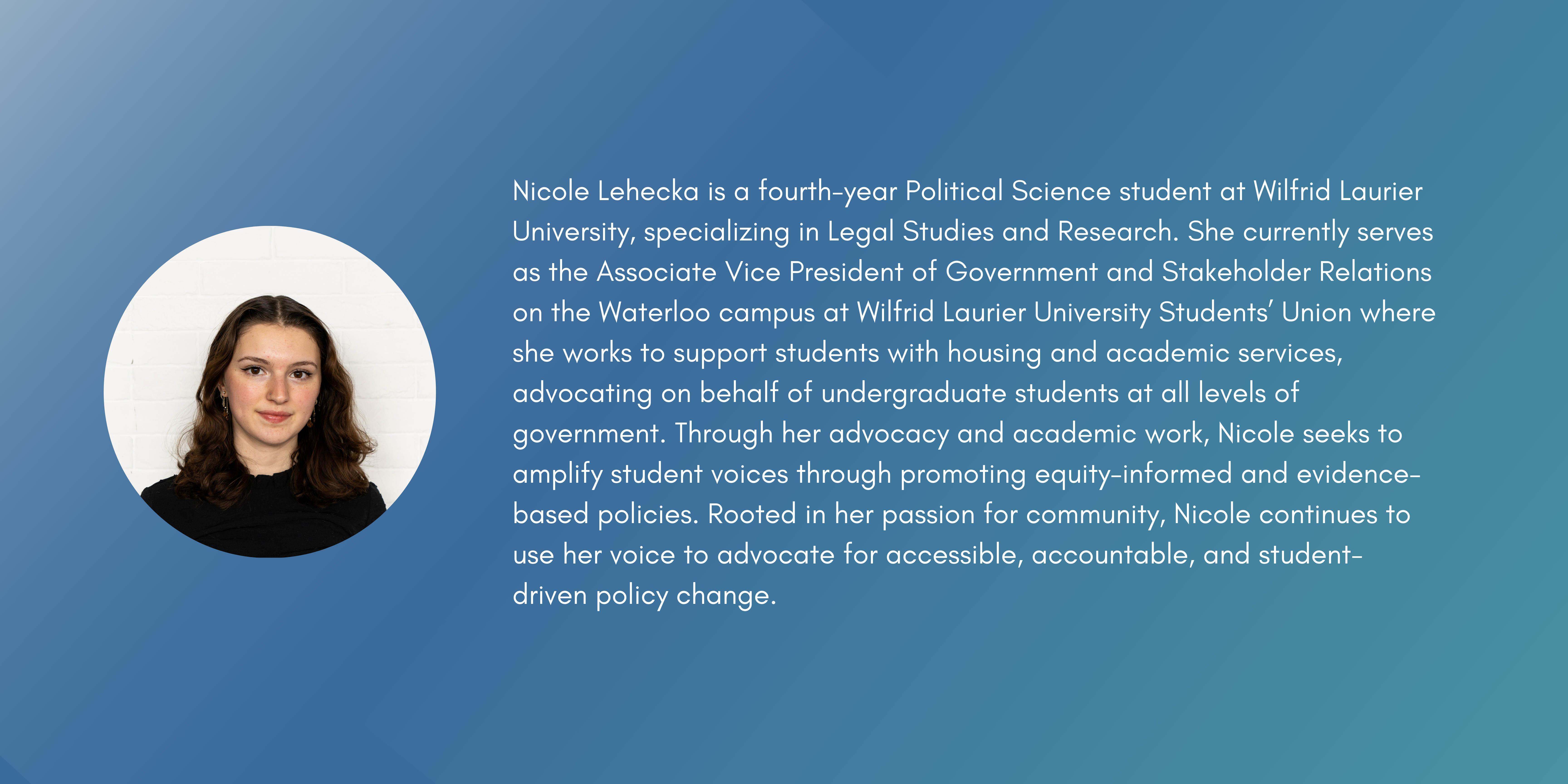
I often think about ways to improve the student experience, reflecting on how I could help the students who will come after me in the work that I do now. A critical aspect of that work is housing. What does it mean to call a place home as a student? Is it as simple as a place to live? Or is it the surrounding security, community, and ability to thrive at school without the stress of wondering where you’ll live next year? For us students in Waterloo, known for its universities and large student population, housing has become one of the biggest challenges we face. Behind the image of a “student city” lies the reality that housing is expensive, precarious, and often exploitative of students, an experience many of us have faced firsthand. So I ask why, in a city built on student life, is finding safe, affordable housing such a common struggle among students? Why do most students I know carry a nightmare housing story with them?
At first glance, Waterloo looks like an emerging leader in student housing, and it is. With over 17,500 purpose-built student accommodation (PBSA) beds, it accounts for 42% of Canada’s PBSA market (Revington & August, 2020). However, while this is a large amount of student housing in numbers, your questions should look beyond quantity. What is the quality of this housing? Is the price tag fair for what you’re getting? Is the location safe? Students sacrifice one of these requirements often enough that even alumni from pre-pandemic years would say doing so is “a given” in hopes of securing affordable housing. This is what happens when housing decisions are made based on investment rather than reasonable affordability in mind.
Students often feel the brunt of the consequences. Rents have soared from an average of $601.17 in 2014 to $950.38 in 2023 to present day, reaching significantly higher costs for the same room than just two years ago (Waterloo Town and Gown Committee, 2023). In addition, leases are packed with illegal clauses, such as requiring six months’ rent upfront or agreeing to a blank lease, disproportionately targeting international students. Additionally, students are too often pushed into signing contracts they don’t fully understand, only to later realize they’ve signed away their rights.
When I hear stories from other students about mold, broken locks, or landlords who vanish the moment rent is paid, I'm reminded in my advocacy that this isn’t just about the statistics or the politics that are so easy to get caught up in; it’s about the dignity, safety, and fairness of housing for students. Scrolling endlessly through rental listings, competing with dozens of others for a single room, or settling for unsafe housing has become a very real part of the student experience in Waterloo. For many, housing stress means making difficult choices between rent, food, and well-being. Racialized and newcomer students, especially international students, are disproportionately subjected to discrimination, scams, and exploitative demands, in some instances even being denied housing.
Students have been told that we’re clever and resilient. That we adapt. But should resilience really mean normalizing housing stress as a “rite of passage” in student life? Tuition and cost of living are already our two biggest expenses (Waterloo Town and Gown Committee, 2023). Why now must we shoulder the exploitations of the student housing market as well? In my past three years at Laurier, I and those close to me have run into nothing but trouble when trying to find housing in Waterloo. That is, until we learned our way around the system only after learning from our, at times, dangerous and costly mistakes. From blank leases to no leases to too good to be true spaces, students are forced to be clever and cunning when looking for housing. Many landlords, in my experience, look to take advantage of students, especially first-year students, by pushing them to sign leases, sometimes without even showing the space or hiding dangerous aspects of the space, such as infestations, mold, or exposed fire-hazardous wire. Often, students don’t have the education on what to look for in leases and during house tours, which leads to missing additional expenses, not identifying red flags, and other pitfalls that those with more experience may notice. Additionally, when tenants do have a bad experience and wish to move out, they’re often faced with an inflated market due to a now limited supply of housing that was otherwise more reasonable at the beginning of the school year. Many feel unable to leave, constrained by the costs of limited affordable housing. When both tuition and cost of living increase rapidly with little to no support, the pressure on us to perform well in our academics and career is that much harder. In Waterloo, a place with more student-specific housing than anywhere else in Canada, the fact that affordability and security are still an issue is incredibly alarming. If housing here, in the model student city, is failing us, what does that say about the trajectory of student housing elsewhere? While the city is working to approve affordable housing units, this process is often tied up in provincial bureaucratic processes, which delay housing for approval. In addition, the Region of Waterloo receives funds from both the federal and provincial governments to create permanent affordable housing, but decades of a lack of investment into subsidized housing from governments have contributed to the significant shortage of supply. With growing housing costs, the gap between housing and income continues to accelerate, forcing many into homelessness or unsafe living conditions.
So what needs to change? First, students needthe right tools and education. Too many of us are signing illegal leases simply because we don’t know our rights. Universities and their student unions should provide mandatory workshops and accessible resources, especially for first-years navigating the rental market for the first time. Second, there must be some form of accountability. Landlords should not profit from breaking the law. We have a responsibility to crack down on predatory practices and unsafe living conditions. Third, we must put people before profit. Provincially, that means lobbying for policy on rent caps, stricter living condition regulations, and creating subsidies that ease the pressure placed on students who need it. This also means recognizing how race, immigration status, and income can directly shape access to housing, and ensuring those inequities are addressed and reported. Finally, students must be included in the decision-making process. No housing policy will succeed without the voices of those living through this crisis daily, who can provide the often-overlooked details of such experiences.
Moving forward, student housing should not be an issue we accept as normal. If you’ve ever felt pressured to sign a lease, struggled to keep up with rent, or faced discrimination in the housing search, you’re not alone. Where a student lives provides a sense of security and the ability to focus on academics without fear of being priced out or forced into unsafe living conditions. At the end of the day, that's what we're really advocating for.
References
Waterloo City Hall. Waterloo City Council. Waterloo Town and Gown Committee. Report on Waterloo Student Accommodations. 2023. Committee Report CTTEE2023-002.
City of Waterloo. (2022). Affordable housing strategy. City of Waterloo. https://www.waterloo.ca/en/government/resources/Documents/Cityadministration/Affordable-Housing-Strategy.pdf.
Revington, N., & August, M. (2020). Making a market for itself: The emergent financialization of student housing in Canada. Environment and Planning A: Economy and Space, 52(5), 856-877.